FREQUENTLY ASKED QUESTIONS
Your questions, answered.
How can we help?
No results found for your search.
What is Pila?
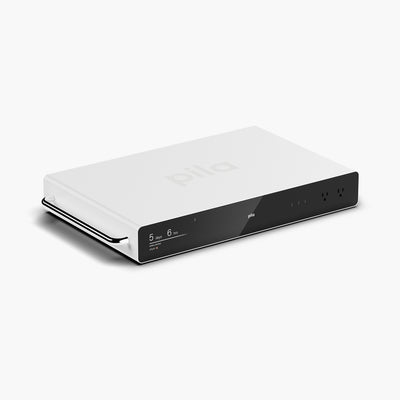
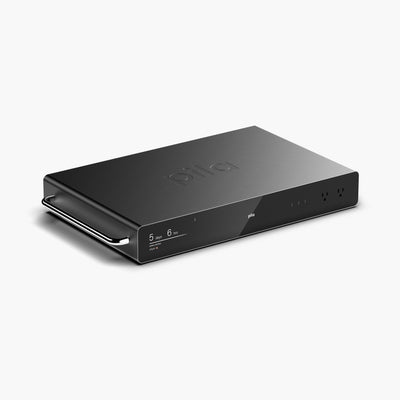
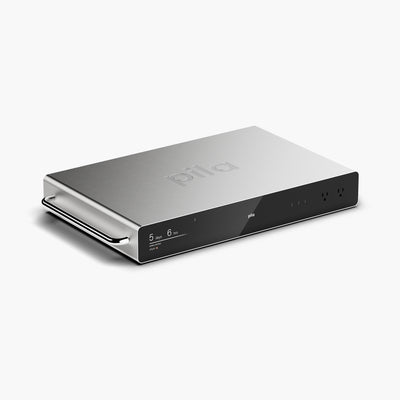
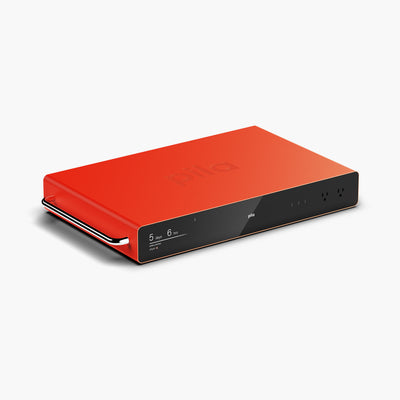
The Pila Mesh Home Battery plugs into a standard 120V wall outlet and does two jobs: it keeps high-draw essentials like your refrigerator running during outages, and it works with your solar and your utility rates to optimize your energy use the rest of the year.
Setup takes minutes – plug Pila into the wall, plug your appliances in, no electrician or rewiring. When the grid drops, Pila switches to battery automatically. Day to day, you get control over when energy is stored and used, plus real-time insights in the app.
Add more batteries anytime: they find each other over Pila's mesh network and run as one coordinated system across your home.
Read more about The Pila Difference →
Traditional home batteries are large, permanent installations — expensive, invasive, and tied to a single electrical panel. Portable power stations are designed for occasional use and not built to live in your home. Pila sits in between: a persistent, plug-in home battery that lives with your appliances, automatically provides backup during outages, and intelligently manages energy day to day. No rewiring. No installation hassle.
The Pila Mesh Network is the magic behind how multiple Pila batteries seamlessly connect together, and allowing them to communicate with each other for coordinated battery control, plus a unified view of your home's energy. It is a secure, encrypted local network exclusive to your home, and it works even if Wi-Fi goes down to keep your home's energy smart and dependable.
Pila is currently available to customers in the United States and Puerto Rico.
We are not shipping internationally at this time, but we designed Pila to work on any grid in the world. Tell us where you are and help us decide which country we launch in next.
A Powerwall is a permanently installed system. It is wired into your electrical panel, generally requires an electrician and permits, and usually is not an option if you rent.
Pila plugs into a standard 120V wall outlet. There is no rewiring, no panel upgrade and no permit, so it works in apartments and rentals as well as owned homes, and you can take it with you when you move. You start with a single 1.6 kWh battery and add more over time — they link over the Pila Battery Mesh and act as one system.
A Powerwall holds far more energy in a single unit and is designed to back up an entire panel. Pila is designed around the appliances you actually care about, with per-outlet control and submetering, and it is virtual power plant ready out of the box. See the full comparison →
Portable power stations are built for camping and job sites. You carry the unit to wherever you need power and plug devices directly into it, and it sits idle the rest of the year.
Pila is built to live in your home and work in the background. It switches over automatically when the grid goes down rather than waiting for you to plug things in, charges when electricity is cheap and runs your home when rates peak, and coordinates with rooftop solar. It also expands over time through the Battery Mesh, and adds per-outlet on/off control and submetering that portable units do not offer.
If you want something for a campsite, a portable station is the right tool. If you want backup power and lower bills at home without an electrician, that is what Pila is for.
Setup & Installation
Setup is quick: place Pila next to the appliances and devices you want to back up – fridge, your media console and Wi-Fi router, your sump pump, your aquarium – plug Pila into a standard 120V wall outlet, then plug your appliances into Pila. That's the setup! Your Pila arrives at about 25% charge and tops up to full in under an hour on a standard outlet.
Connecting Pila to Wi-Fi and using the Pila App to finish setup ensures you always get the latest software updates and new features.
Download the Pila App to walk through setup.
You'll use the free Pila App to get set up – it walks you through it in a few minutes, with no subscription or monthly fee. After that, the app is there when you want it: remote monitoring from anywhere, energy history over time, and advanced settings. But you're not tied to it.
Pila has an onboard screen for everyday use, backup works automatically whether the app is used or not, and once you're set up you can connect Home Assistant or other dashboards to monitor and control Pila your own way.
Download the Pila App: App Store · Google Play
Place Pila batteries near the appliances you want to back up – your refrigerator, TV, networking gear, or home office. For multi-room coverage, one Pila per location is ideal.
Once it's placed, set-and-forget! Most people set Pila up once and never move it. Because it stays plugged in, Pila backs you up whether you're home or away. And over time it learns how your appliances behave – optimizing when energy is stored and used, and catching problems early, like a fridge that's starting to fail, before it spoils your food or becomes a costly repair. A portable power station is made to be carried to wherever you need a few hours of power. Pila is made to live with your appliances and work around the clock.
For placement options, see the Vertical Stand Base and the Wall Mounting Bracket.
It depends on which appliances matter most to you. Most customers start with 2-4. Pila powers devices plugged directly into it, so you need one Pila per room. But even a single Pila is great for essentials like your fridge, Wi-Fi, and phone charging.
Design your perfect Pila home battery system in 30 seconds using our Configuration tool!
Yes. There's no technical limitation to plugging a standard power strip into one of Pila's outlets.
You may not need one, though. Pila has four outlets, each independently controllable, plus built-in surge and overload protection – the same protection most strips add. If you do use a power strip, keep the total draw of everything plugged into Pila within your wall outlet's continuous rating: typically 12-15A, or about 1400-1800W at 120V. Devices on the power strip share the single Pila outlet they're plugged into, so you'll control them as a group.
Backup Power
A single Pila battery keeps an average refrigerator powered for around 24-32 hours. With an Expansion Pack, that doubles to 64 hours. During an outage, Pila learns your appliances actual consumption and shows a real-time backup time forecast. Wi-Fi router: 132 hours. Lights: 158 hours. Laptop: 23 charges. Smartphone: 113 charges.
Learn more about what Pila can power here!
Add capacity with the Pila Expansion Battery.
Pila powers most appliances that plug into a standard 120V outlet — refrigerators, Wi-Fi routers, TVs, laptops, phones, lamps, plug-in air conditioners, and sump pumps.
Continuous power limit is 2400W total.
Surge power limit is 3600W for 30 seconds.
Peak power handles 65A RMS startup surges.
Pila does not support 240V appliances like central AC or electric ranges.
Keep an eye on your food with the Fridge Temperature Monitoring Kit.
When grid power is interrupted, Pila automatically switches to battery power in 10 milliseconds — no action needed from you. You'll be automatically notified when power is out via the Pila App, provided a personalized backup time forecast, and notified when utility power is restored.
When utility power is restored, Pila transitions back automatically and resumes charging and optimizing energy in the background for you.
Curious how often outages hit your area? Explore America's Grid Health.
Pila serves some of the same basic roles as an old-school UPS — automatic backup switchover, suitable for sensitive electronics. But the similarities end there...
A UPS is built for one job: bridge the gap for a single device when the power cuts, then go back to sitting idle. Pila works every day. It optimizes when your energy is stored and used, works with your solar and your utility rates to lower your bills, and learns your appliances well enough to catch a failing fridge before it spoils your food. Link several together over Pila's mesh network and that coverage extends across your whole home, all from standard outlets with no rewiring.
And while a UPS keeps small devices running for minutes, Pila is designed to power larger, essential household loads like refrigerators for many hours to days.
Generators require fuel, installation, and manual management. Pila provides clean, silent, instant backup with no fuel or installation required. You can also use both together — run appliances on Pila during an outage and use a generator to recharge it.
Read more about The Pila Difference →
Charging & Energy
Pila charges three ways: from the grid through a standard wall outlet, from rooftop solar coordinated through your outlet, or directly from plug-in solar panels (Pila solar kits expected to start shipping later in 2026). From empty, a full recharge at max speed takes about an hour on a standard outlet.
Learn more about the Pila Plug-In Solar Panel Kit.
Yes. Configure charge and discharge schedules in the Pila App to match your utility rate schedule — charge overnight when rates are low, discharge during peak hours.
See what you would pay where you live on America's Grid Health.
Yes. Pila can be configured to automatically prioritize battery power even when the grid is available, to manage utility power bills and optimize home solar usage. Managed through the Pila App or onboard settings screen.
Technical Specs
Pila batteries use Lithium Iron Phosphate (LFP) cells — the same chemistry used in EVs and power tools, known for thermal stability and long cycle life. Rated for a 10-year lifetime under typical residential conditions.
More on how Pila is built for the long haul: Built to Outlast.
Under light loads (~500W or less), virtually silent. As load increases, fans become audible as a soft whirr from about 10 feet away. Fan noise is tuned toward lower frequencies to avoid high-pitched whine.
20 milliseconds or less — in practice typically below that. Well within what most modern electronics, networking gear, and computers can tolerate without even flickering.
Yes. Pila outputs pure sine wave AC – the same shape of power as your wall outlet – so sensitive electronics like computers and networking gear, and motor-driven appliances like your refrigerator, run on it normally. Its harmonic distortion sits in the same range as typical grid power, which is what sensitive electronics are designed for.
Connectivity & App
A free mobile app that gives you visibility and control over your Pila system. Monitor battery status, see appliance energy usage, manage scheduling, and control the system remotely. No monthly subscription fees.
Pila connects two ways: to the internet, and to other devices.
For internet, Pila uses dual-band Wi-Fi (2.4 and 5 GHz). You can optionally connect over Ethernet with a USB-to-Ethernet adapter on the rightmost USB port. And every unit includes built-in 4G LTE as a backstop – if your home internet goes down, Pila stays connected for the essentials, like outage notifications and historical energy data. Note: Some app features may be limited while Pila is on cellular only.
For device communication, Pila uses Bluetooth and our patent-pending Pila Mesh Network – a secure local network that keeps your batteries talking to each other reliably, even without internet.
Yes. Pila works with Home Assistant: integrate your system to view status, monitor energy use, and build automations alongside the rest of your smart home. It's optional, built for advanced users who want deeper control.
Setup and developer docs live on our GitHub →
Yes. Pila works with rooftop solar. Enphase systems communicate directly right now, so Pila tracks your real-time solar production. All that is required is communication over your home Wi-Fi to the Enphase Envoy. Direct communication integration with other rooftop systems will be added via free over-the-air software updates.
You don't need a directly supported system to benefit, though. Every Pila includes solar estimation, which predicts your production from your location and time of day, local weather, and your system's rated size – no direct connection required. Either way, Pila can factor your solar into how it charges and manages energy.
Follow the Enphase setup guide, or add panels directly with the Plug-In Solar Panel Kit.
Ordering & Delivery
Order online here.
Once you order, we'll keep you posted on your delivery date. Demand is high right now, so your delivery window may be several weeks out; the product page always has the latest timing.
Already placed an Early Access reservation? Those orders are shipping now – you should have heard from our team with your delivery details. If you haven't, just contact our team and we'll get you sorted.
Yes — at any time before your order ships. Once shipped, orders can no longer be canceled but may be returned per our Cancellation, Return and Refund Policy. Contact our Support Team at support@pilaenergy.com and we'd be happy to assist.
Pila is a modular home battery designed to run real household essentials for many hours — fridge, Wi-Fi, lighting, workspace. Whole-home battery systems can do this but cost $10,000–20,000+ and require professional installation. Portable power stations are not designed for everyday home use. UPS systems power a single device for minutes. Pila sits in between: powerful, plug-in, no installation required.
Read more about The Pila Difference →
Expanding Your System
The Pila Expansion Pack adds 1.6 kWh to a base Pila, doubling your storage to 3.2 kWh. It connects through a dedicated rear port, so there's no wiring, and both batteries are managed together in the Pila App. You can reserve one with your Pila order now; Expansion Packs will ship in late 2026.
Pila's Battery Mesh Network lets you connect up to 64 batteries seamlessly today. All units appear in the Pila App as one coordinated system.
Pila does not support directly connecting third-party batteries. Third-party units cannot communicate with Pila's battery management system. To add capacity, use additional Pila units or the Expansion Pack.
However, if you have a whole-home battery system like Powerwall, there is no issue using Pila as an extra layer of protection.
Browse Pila accessories to expand your system.
Safety & Warranty
Pila meets rigorous UL safety standards and includes surge protection, over-voltage monitoring, and temperature regulation. Uses Lithium Iron Phosphate (LFP) chemistry — known for thermal stability. Our team brings direct experience advancing UL and NEC standards through work on Tesla Powerwall and SPAN smart panels, and we take our product safety seriously.
Yes. Every Pila comes with a 5-year limited warranty. Full terms are on the Pila Battery Limited Warranty page.
By default, no. Pila supplies power only to devices plugged directly into its outlets and does not export back to the grid.
Pila's hardware is built for future bidirectional capability as product standards evolve. Stay tuned!
See what is shipping next on the Pila roadmap.
Pila is designed for indoor use. Prolonged exposure to moisture or condensation can cause damage. Do not use in outdoor or wet environments. If Pila gets wet, allow it to dry fully before use and contact support.
Yes. Pila publishes an Emergency Response Guide covering hazards, shutdown steps, and emergency procedures for firefighters, AHJs, and other first responders.
View the full guide at pilaenergy.com/pages/emergency-response-guide
Setup Guides
Pila connects directly to your Enphase IQ Gateway (Envoy) over your home network. There is no cloud service required.
View the full setup guide at pilaenergy.com/enphase
The Fridge Kit adds two wireless sensors that report the temperature and door state of your fridge and freezer, plus the cords, clips and drill bits to install your Pila in a cabinet nearby.
View the full setup guide at pilaenergy.com/fridge-kit-setup
Some common questions...
Pila YouTube →Own Your Power.
Modern backup power and energy control, designed for your home.