


Safety Documentation
Mesh Home Battery Emergency Response Guide
Hazards and emergency procedures for the Pila Mesh Home Battery, for emergency responders, Authorities Having Jurisdiction (AHJs), Pila staff, installation partners, and customers.
This guide provides general information regarding the safe handling of and emergency response to the Pila Mesh Home Battery. It does not replace applicable laws, regulations, codes, emergency-response procedures, professional training, or the judgment of qualified emergency-response personnel.
1. Introduction and Scope
This Emergency Response Guide (ERG) is a resource for emergency responders, Authorities Having Jurisdiction (AHJs), Pila Energy staff, installation partners, and customers, describing the hazards associated with the Pila Mesh Home Battery and the procedures to follow in an emergency.
The Pila Mesh Home Battery is a rechargeable Lithium Iron Phosphate (LFP) battery energy storage system designed for indoor residential use. It provides automatic backup power to connected loads during utility outages and intelligent energy management during normal operation. Throughout this guide, the Pila Mesh Home Battery is referred to as "the product." The information in this guide is believed to be accurate as of the date of publication and is reviewed periodically.
The latest revision of this guide should be available at pilaenergy.com/pages/emergency-response-guide.
2. Company, Contact, & Product Info
2.1 Identification of Company and Contact Information
| Product | Pila Mesh Home Battery – 1.6 kWh rechargeable lithium iron phosphate (LFP) battery energy storage system with automatic backup power |
| Company | Pila Energy |
| Company Address | 610 22nd St, Suite 316, San Francisco, CA 94107 |
| Manufacturer | Pila Energy |
| Email Support | support@pilaenergy.com |
2.2 Safety Data Sheet (SDS) Information
Safety Data Sheets for materials in the Mesh Home Battery are available on request.
2.3 Battery Cells
The Pila Mesh Home Battery contains sealed rechargeable lithium-ion battery cells using lithium iron phosphate (LFP) chemistry. The cells do not contain metallic lithium.
The battery cells are contained within an integrated battery pack equipped with a battery management system (BMS) designed to monitor and manage battery operation.
| Chemistry | Lithium iron phosphate (LFP) |
| Nominal pack voltage | 51.2 VDC |
| Capacity | 1.6 kWh / 31.25 Ah |
| Nominal individual cell voltage | 3.2 VDC |
2.4 Product Description
The Pila Mesh Home Battery is a rechargeable lithium iron phosphate (LFP) battery energy storage system designed for indoor residential use. The product connects to utility power through a standard AC connection and provides automatic backup power to connected loads in the event of a utility power interruption.
| Model / Part Number | MB16-NA-A1 |
| Nominal Energy Capacity | 1.6 kWh (31.25 Ah) |
| Nominal System DC Voltage | 51.2 VDC |
| AC Input | 120 V AC, 60 Hz, 15 A max |
| AC Output — Bypass | 120 V AC, 60 Hz, 15 A max |
| AC Output — Inverter | 120 V AC, 60 Hz, 20 A max |
| Weight | 22.9 kg (50.5 lb) |
| Dimensions (H × W × D) | 692 × 395 × 85 mm (27.25 × 15.55 × 3.35 in) |
| Enclosure Rating | IP20; indoor stationary use only |
3. Handling, Use, & Hazard Precautions
3.1 General Precautions
The product described in this guide contains a rechargeable lithium-ion battery system and can present a risk of electric shock, fire, explosion, serious injury, death, or property damage if damaged, abused, or improperly handled.
The product contains sealed lithium iron phosphate (LiFePO₄ / LFP) battery cells and stores electrical energy. Do not disassemble, short circuit, puncture, crush, incinerate, immerse in or expose to liquids, force discharge, or expose the product to temperatures outside its specified operating range (see Section 3.3).
Mechanical, thermal, or electrical abuse may damage the battery cells and can result in internal or external short circuits, overheating, electrolyte leakage, fire, or other hazardous conditions. Under normal operating conditions, the electrolyte is contained within sealed battery cells. If the battery or enclosure is damaged, electrolyte may leak. Electrolyte is corrosive. Avoid contact with skin and eyes and ensure adequate ventilation if leakage occurs.
WARNING: Disconnecting the product from utility power does not eliminate the potential hazards associated with energy stored in the internal battery. Treat a damaged or otherwise compromised product as potentially energized.
3.2 Electrical Hazards
Under normal operating conditions, with the enclosure intact and closed, internal battery components are not accessible. The product contains no user-serviceable parts and should not be opened, disassembled, or modified.
The product contains a 51.2 VDC nominal battery system and can retain stored electrical energy when disconnected from utility power. Electrical hazards may be present if the enclosure, internal components, wiring, or safety systems have been damaged or compromised.
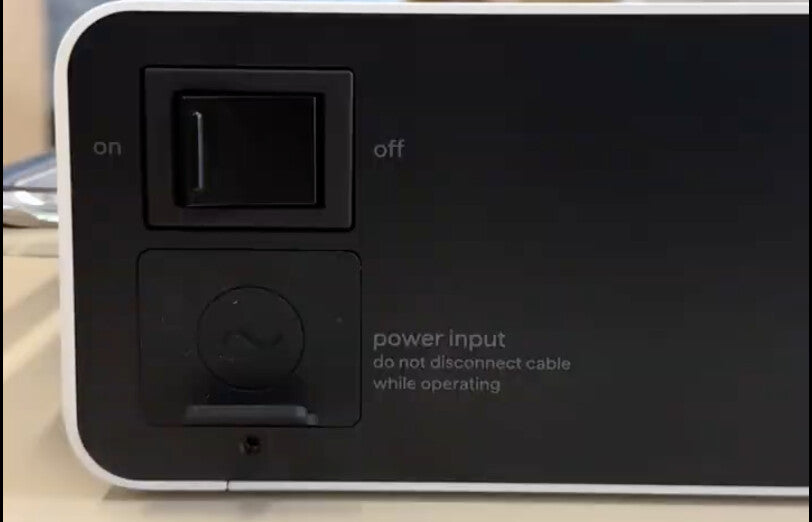
To isolate the product from utility power, turn the rear AC power switch to the OFF position or unplug the AC power cord from the wall receptacle. Disconnecting the product from utility power does not de-energize the internal battery.
If the product has been significantly damaged, treat it as potentially energized. Do not touch exposed internal components, conductors, or damaged electrical connections until the electrical hazard has been assessed.
WARNING: Do not cut, open, puncture, disassemble, or otherwise penetrate the product enclosure. Internal components may remain energized and present an electrical shock, short-circuit, or fire hazard.
Per the MB16-NA-A1 User Guide, the product must be connected only to a properly grounded 120V AC receptacle (no ungrounded adapters or extension cords that defeat the ground connection), on a circuit with 20A maximum branch circuit overcurrent protection per NFPA 70 / CSA C22.1. GFCI protection should be verified on the circuit or receptacle where required by the NEC or local code – note that in off-grid (battery/backup) mode, premises GFCI may not protect the product's outputs. AFCI protection should be verified on the branch circuit where required.
For proper installation / assistance with a damaged product, contact Pila (see 2.1).
3.3 Temperature and Thermal Hazards
The product is designed to operate within an ambient temperature range of -20°C to 45°C (-4°F to 113°F), at 5–95% relative humidity, non-condensing.
For storage, the specified temperature range is -30°C to 60°C (-22°F to 140°F) for short-term storage of less than 7 days, and -20°C to 45°C (-4°F to 113°F) for long-term storage of less than 6 months.
Do not operate or store the product outside its specified temperature limits. Exposure to excessive heat, open flame, or other localized heat sources may damage the battery cells and increase the risk of overheating, fire, or other hazardous conditions.
Keep the product away from radiators, heat registers, stoves, open flames, and other heat-producing equipment. Keep all ventilation openings clear and unobstructed.
If the product has been exposed to excessive heat or fire, treat it as potentially hazardous and follow the applicable emergency response procedures in this guide.
3.4 Hazards Associated with Mechanical Damage
Mechanical damage to the product may compromise the enclosure, battery cells, electrical components, or internal safety systems and can result in hazardous conditions, including:
- Electrical shock or short circuit
- Electrolyte leakage
- Overheating
- Fire
- Exposure to internal battery or electrical components
Do not use or operate the product if the enclosure is cracked, punctured, crushed, deformed, or otherwise significantly damaged, or if the product has been dropped or exposed to liquid.
If the battery or enclosure is damaged, electrolyte may leak. Electrolyte is corrosive. Avoid contact with skin and eyes and ensure adequate ventilation if leakage occurs (see Section 3.6).
Do not open, disassemble, crush, puncture, or otherwise penetrate the product enclosure. If significant mechanical damage is present or suspected, treat the product as potentially energized and follow the applicable emergency response procedures in this guide.
3.5 Hazards Associated with Leaked Electrolyte
The product contains lithium-ion battery cells with sealed electrolyte. Under normal operating conditions, the electrolyte is contained within the battery cells and is not exposed.
If the battery cells or product enclosure are damaged or compromised, electrolyte may leak. Electrolyte is corrosive and contact with skin and eyes should be avoided.
If electrolyte contacts the skin or eyes, immediately flush the affected area with water and seek medical attention. Ensure adequate ventilation if electrolyte leakage occurs.
Do not touch, handle, or attempt to clean up leaked electrolyte without appropriate personal protective equipment. Treat a product exhibiting electrolyte leakage as damaged and potentially hazardous.
3.6 Hazards Associated with Vented Electrolyte or Gases
The product contains lithium-ion battery cells with sealed electrolyte. Venting or release of electrolyte or gases is not expected under normal operating conditions.
If the battery cells are damaged, overheated, or otherwise subjected to abnormal conditions, the integrity of the sealed cells may be compromised. If venting, smoke, vapor, unusual odor, or other evidence of battery cell failure is observed, treat the product as potentially hazardous.
Do not inhale or intentionally come into contact with materials released from a damaged or overheated battery. Move away from the affected area and provide ventilation when it is safe to do so. Avoid potential ignition sources in the vicinity of a damaged or venting product.
WARNING: A product that is venting, smoking, rapidly heating, or exhibiting other signs of battery cell failure should not be handled. Contact the fire department or other appropriate emergency response personnel and follow the applicable emergency response procedures in this guide.
4. In Case of Emergency
WARNING: In the event of fire, smoke, unusual odor, electrolyte leakage, severe physical damage, or other suspected battery failure, do not open, disassemble, puncture, or otherwise penetrate the product enclosure.
WARNING: A damaged product may remain electrically energized even when disconnected from utility power. Do not touch exposed internal components, conductors, or damaged electrical connections.
CAUTION: Emergency response involving a damaged, burning, leaking, venting, or otherwise compromised battery should be performed by appropriately trained emergency response personnel.
4.1 During Storage or Operation
Conditions requiring emergency response may include, but are not limited to:
- Smoke, fire, or unusual odor originating from the product
- Electrolyte leakage
- Rapid or abnormal heating
- Severe physical damage, crushing, puncture, or deformation
- Exposure to fire, flooding, or significant liquid intrusion
- Exposed or damaged internal electrical components
In the event of an emergency:
- Do not approach or handle the product if it is burning, smoking, leaking, rapidly heating, or otherwise unsafe to approach.
- If the product can be safely accessed, turn the rear AC power switch to the OFF position and disconnect the AC power cord from the wall receptacle to isolate the product from utility power. Do not attempt this if doing so would require approaching a fire or otherwise hazardous product.
- Evacuate occupants from the immediate area and prevent unauthorized access.
- Contact the local fire department or other appropriate emergency response personnel.
- Inform emergency responders that the product contains a 1.6 kWh lithium iron phosphate (LFP) battery system with a nominal battery voltage of 51.2 VDC.
- Do not reopen, disassemble, move, or return a damaged product to service until it has been evaluated and appropriate handling instructions have been provided.
NOTE: Turning the rear AC power switch OFF or unplugging the AC power cord isolates the product from utility power but does not de-energize the internal battery.
4.2 During Transportation
Emergencies during transportation may include, but are not limited to, smoke, fire, unusual odor, electrolyte leakage, abnormal heating, or a transportation accident resulting in significant physical damage to the product.
In the event of a transportation emergency:
- Do not handle or move a product that is burning, smoking, leaking, unusually hot, severely damaged, or otherwise unsafe to approach.
- Stop the vehicle in a safe location, if it is safe and practical to do so, and keep people away from the affected product or vehicle.
- Evacuate the immediate area as appropriate and prevent unauthorized access.
- Contact the local fire department or other appropriate emergency response personnel.
- Inform emergency responders that the product contains a 1.6 kWh lithium iron phosphate (LFP) battery system with a nominal battery voltage of 51.2 VDC.
- Contact the 24-hour hazardous materials transportation emergency response number identified on the product's shipping documentation (see Section 2.1).
WARNING: Do not open, disassemble, puncture, crush, or otherwise penetrate a product that has been damaged during transportation. A damaged product may remain electrically energized and may present electrical, fire, or chemical hazards.
5. Firefighting Measures
WARNING: Fire involving the Pila Mesh Home Battery should be handled by trained firefighting or emergency response personnel. The product contains an energized lithium iron phosphate (LFP) battery system and may present electrical, fire, explosion, and chemical hazards if involved in a fire or significantly damaged.
Do not open, puncture, disassemble, or otherwise penetrate the product enclosure during emergency response. A battery involved in or exposed to fire should be treated as potentially energized and hazardous.
5.1 Firefighter PPE
Firefighters responding to a fire involving the product should wear full structural firefighting protective equipment and positive-pressure self-contained breathing apparatus (SCBA).
Avoid direct contact with electrolyte or other materials released from a damaged or burning battery.
5.2 Responding to a Venting or Smoking Unit
Smoke, vapor, unusual odor, abnormal heating, or other signs of battery cell failure may indicate a hazardous condition.
If a product is venting, smoking, or exhibiting signs of abnormal heating:
- Evacuate non-emergency personnel from the immediate area and prevent unauthorized access.
- Contact the local fire department or other appropriate emergency response personnel.
- Do not approach, touch, move, open, puncture, or disassemble the product if it is unsafe to do so.
- If the product can be safely accessed without approaching a hazardous condition, isolate it from utility power by turning the rear AC power switch to the OFF position or disconnecting the AC power cord from the wall receptacle. The internal battery may remain energized.
- If fire develops, follow the firefighting procedures in Section 5.3.
- After the immediate emergency has been controlled, do not move, handle, reconnect, or return the product to service until the condition of the battery has been appropriately assessed and handling instructions have been provided.
WARNING: Do not assume that a product is safe solely because visible smoke, fire, or other signs of failure have stopped. A damaged battery should continue to be treated as potentially hazardous.
5.3 Responding to a Structure Fire with the Product Present
If a structure fire occurs and the product is not directly involved in the fire, conduct firefighting operations in accordance with standard structure-fire procedures while recognizing the presence of the battery energy storage system.
- Identify and communicate the presence and location of the Pila Mesh Home Battery to incident command and responding personnel.
- If the product can be safely accessed, isolate it from utility power by turning the rear AC power switch to the OFF position or disconnecting the AC power cord from the wall receptacle. The internal battery may remain energized.
- Do not move, open, puncture, disassemble, or otherwise disturb the product during firefighting operations unless necessary for emergency response and determined safe by trained personnel.
- If the product has been exposed to heat, flame, water, physical damage, or other conditions that may have compromised the battery or enclosure, treat it as a damaged battery and follow the applicable procedures in this guide.
- Following suppression of the structure fire, evaluate the product for evidence of damage, abnormal heating, smoke, venting, electrolyte leakage, or other abnormal conditions.
- Do not reconnect or return a product exposed to fire or significant heat to service until its condition has been appropriately evaluated by Pila personnel.
6. Shutting Down in an Emergency
WARNING: Disconnecting the product from utility power does not de-energize the internal battery. Stored electrical energy remains within the product and may present an electrical, short-circuit, or fire hazard.
WARNING: If the product is smoking, burning, venting, leaking, unusually hot, severely damaged, or otherwise unsafe to approach, do not attempt to shut down, unplug, move, open, or otherwise handle the product. Evacuate the immediate area and contact the local fire department or other appropriate emergency response personnel.
WARNING: In the event of flooding or significant water exposure, do not approach or enter water in contact with the product or its connected electrical equipment.
Emergency Shutdown Procedure
Only perform the following steps if the product can be safely accessed.
Turn the Product Off
Turn the rear AC power switch to the OFF position.
Disconnect from Utility Power
Unplug the product's AC power cord from the wall receptacle.
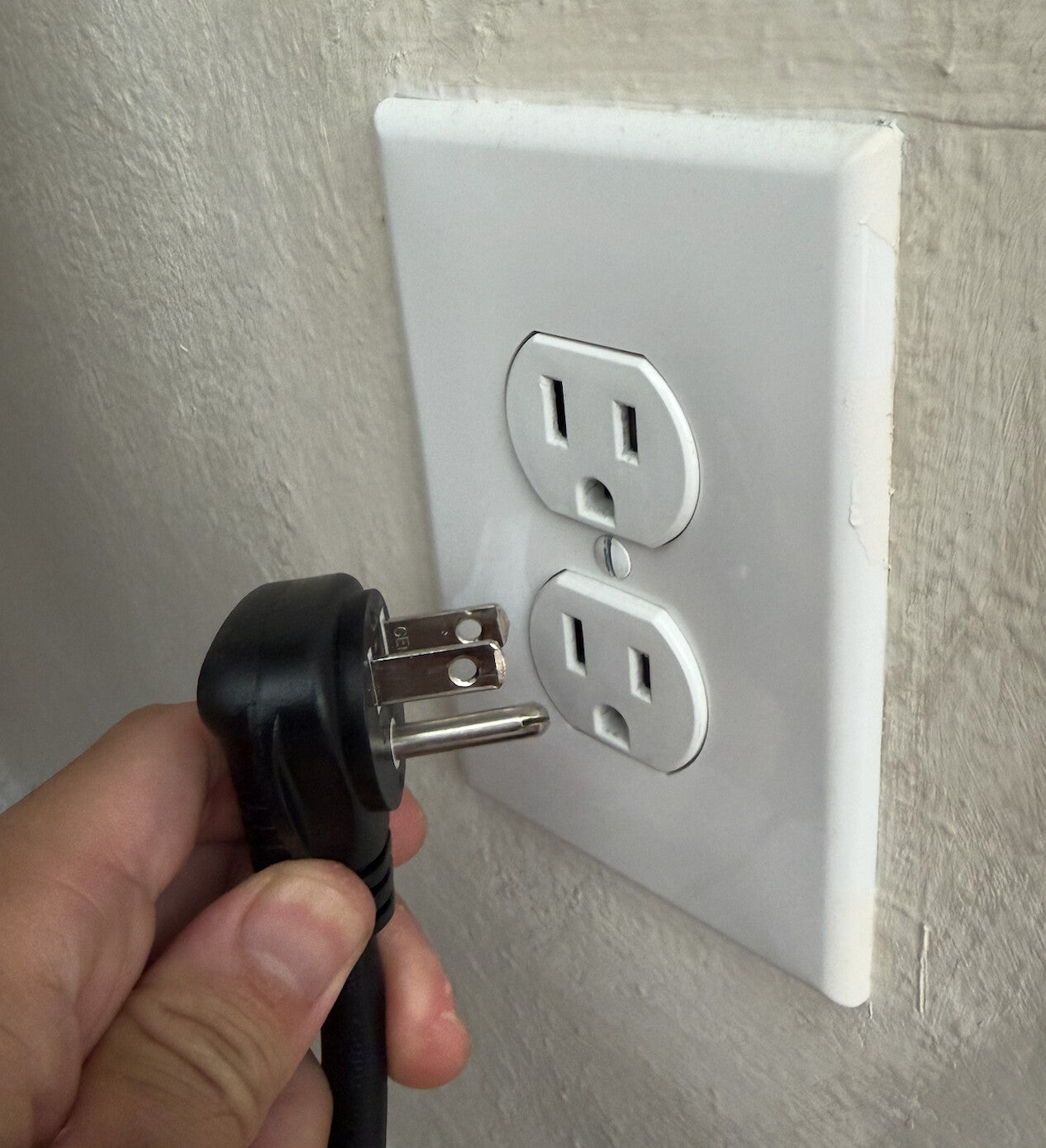
IMPORTANT: These steps isolate the product from utility/mains power. They do not de-energize the internal battery.
After disconnecting the product:
- Do not open, disassemble, puncture, or otherwise penetrate the product enclosure.
- Do not touch exposed internal components, conductors, or damaged electrical connections.
- Do not reconnect or return a damaged or compromised product to service until its condition has been appropriately evaluated.
If the product cannot be safely accessed directly — for example, due to proximity to fire, heat, or smoke — but the home's electrical panel can be identified and safely reached, switching off the branch circuit breaker serving the product's outlet will cut utility power to the unit without requiring anyone to approach it. Unlike a hardwired system with its own dedicated breaker, the MB16-NA-A1 plugs into a standard household outlet that may share a branch circuit with other loads or fixtures. If the correct breaker cannot be confidently identified, or the panel cannot be safely reached either, do not attempt this — evacuate the immediate area, prevent unauthorized access, and contact emergency response personnel.
If the product cannot be safely accessed or the correct breaker cannot be confidently identified or safely reached, do not attempt to perform the shutdown procedure. Evacuate the immediate area, prevent unauthorized access, and contact emergency response personnel.
7. First Aid Measures
7.1 Electric Shock
If electrical shock has occurred or is suspected, do not touch the affected person while they remain in contact with an energized electrical source.
If it is safe to do so, isolate the electrical source without directly contacting the affected person. Seek immediate emergency medical assistance.
7.2 Contact with Leaked Electrolyte
The product contains lithium-ion battery cells with sealed electrolyte. If the battery or enclosure is damaged, electrolyte may leak. The electrolyte is corrosive and contact with skin and eyes should be avoided.
If electrolyte contacts the skin or eyes, immediately flush the affected area with water and seek medical attention.
7.3 Inhalation of Vapors, Smoke, or Gases
If a person has inhaled smoke, vapor, or gases released from a damaged, overheated, or burning battery, move the person away from the affected area and into fresh air, provided it is safe to do so.
Seek immediate medical assistance if the person experiences difficulty breathing, respiratory distress, or other adverse symptoms.
WARNING: Do not enter an area containing smoke, vapor, or gases from a damaged or burning battery without appropriate respiratory protection and emergency-response training.
8. Storage Precautions
Store the product indoors in a dry location protected from flooding, rain, prolonged moisture, excessive heat, and other conditions that may damage the product or battery.
Maintain the following storage conditions:
| Short-term storage (< 7 days) | -30°C to 60°C (-22°F to 140°F), 5–95% RH |
| Long-term storage (< 6 months) | -20°C to 45°C (-4°F to 113°F), 5–95% RH |
| Recommended storage SOC | 25–30% |
Keep the product away from radiators, heat registers, stoves, open flames, and other heat-producing equipment. Do not block ventilation openings.
Before placing a stored product into service, visually inspect it for signs of damage. Do not use the product if the enclosure is cracked or damaged, the power cord is damaged, or the product has been dropped or exposed to liquid.
For storage periods exceeding six months, contact Pila for recommended storage and battery-maintenance procedures.
9. Damaged Product Handling
A product that has been dropped, crushed, punctured, exposed to fire or liquid, or otherwise significantly damaged may present electrical, fire, or chemical hazards. Damage to the enclosure may also compromise the battery cells or internal safety systems.
Do not use, reconnect, charge, or return a damaged product to service.
If damage is observed or suspected:
- If the product is smoking, burning, venting, leaking, unusually hot, or otherwise unsafe to approach, do not touch, move, disconnect, open, or otherwise handle the product. Evacuate the immediate area and contact the local fire department or other appropriate emergency response personnel.
- If the product is not exhibiting signs of an active hazardous condition and can be safely accessed, isolate it from utility power by turning the rear AC power switch to the OFF position and disconnecting the AC power cord from the wall receptacle. The internal battery may remain energized.
- Do not open, disassemble, puncture, crush, or otherwise penetrate the product enclosure.
- If electrolyte leakage is observed, avoid contact with the leaked material. Electrolyte is corrosive. Follow the precautions and first-aid measures provided in Sections 3.6 and 7.
- Keep people away from the damaged product and prevent unauthorized handling.
- Contact Pila for evaluation and instructions regarding handling, transportation, return, or disposal of the damaged product.
- Do not ship or transport a damaged product using normal shipping methods. Follow Pila's instructions and all applicable requirements for transportation of damaged lithium-ion batteries.
WARNING: The absence of visible smoke, fire, leakage, or heat does not establish that a damaged battery is safe to handle, transport, store, or return to service.
10. Disposal Procedures
The Pila Mesh Home Battery contains lithium-ion battery cells and must not be disposed of in household trash or general waste.
If a product is damaged, has been involved in a fire or other thermal event, is leaking, or is otherwise suspected to be unsafe, do not ship, transport, dismantle, or dispose of the product without appropriate instructions.
Contact Pila for guidance regarding evaluation, handling, transportation, recycling, or disposal of the product. Depending on the condition of the battery, Pila may direct the product to an appropriately qualified battery recycler, hazardous-materials service provider, or other approved facility.
Damaged or defective lithium-ion batteries may be subject to special packaging, handling, and transportation requirements. Do not return a damaged product to Pila or ship it using normal parcel or freight services unless specifically instructed to do so.
Products that are not damaged and have reached the end of their useful life should be recycled through an appropriate lithium-ion battery recycling program or facility in accordance with applicable federal, state, and local requirements.
10.1 Regional Disposal and Emergency-Response Resources
IMPORTANT: The organizations and facilities listed below are prospective resources identified by Pila and have not been confirmed as approved or contracted Pila service providers. Inclusion in this guide does not confirm that a provider will accept a Pila Mesh Home Battery or respond to a particular incident.
National (any region)
| Provider | Potential Capability / Notes | Status |
|---|---|---|
| Cirba Solutions | Damaged, defective, and recalled (DDR) lithium-battery management, including large-format batteries and energy storage systems; transportation and recycling capabilities. Phone: 800-852-8127. Email: customerservice@cirbasolutions.com | Prospective |
| Clean Harbors | Nationwide hazardous-materials and emergency-response network with hazardous-waste management and disposal capabilities. 24/7 Emergency Response Hotline: 800-645-8265 (1-800-OIL-TANK). | Prospective |
Denver, CO
| Provider | Location / Potential Capability | Status |
|---|---|---|
| Clean Harbors – Denver Technical Services | 4721 Ironton Street, Unit B, Denver, CO 80239. Local hazardous-materials/technical-services resource. | Prospective |
| Clean Harbors – Deer Trail Facility | 108555 East Highway 36, Deer Trail, CO 80105. Hazardous-waste disposal facility. | Prospective |
Texas
| Provider | Location / Potential Capability | Status |
|---|---|---|
| Clean Harbors – Denton Field Services | 1722 Cooper Creek Road, Denton, TX 76208. Dallas–Fort Worth-area field-services resource. | Prospective |
| Veolia – Texas Facilities | Potential resources in the Dallas, Houston, and San Marcos regions. Specific facility and lithium-battery acceptance requirements to be confirmed. | Prospective |
| Veolia – Port Arthur Treatment Complex | Port Arthur, TX. Industrial hazardous-waste treatment facility; potentially relevant for larger-scale waste-management needs. | Prospective |
California — San Francisco Bay Area
| Provider | Location / Potential Capability | Status |
|---|---|---|
| Veolia – Hayward | Bay Area treatment, storage, and disposal resource. | Prospective |
| Clean Harbors – Richmond | 1125 Hensley St, Richmond, CA. East Bay hazardous-waste services resource. | Prospective |
| Clean Harbors – Martinez | East Bay hazardous-materials/waste-services resource. | Prospective |
California — Southern California
| Provider | Location / Potential Capability | Status |
|---|---|---|
| Clean Harbors – Los Angeles | 5756 Alba St, Los Angeles, CA 90058. Hazardous-waste treatment/storage/disposal resource. | Prospective |
| Veolia – Inglewood | Los Angeles-area treatment, storage, and disposal resource. | Prospective |
| Veolia / Ingenium – San Diego Region | Escondido/San Diego-area hazardous-waste management, transportation, and disposal capabilities. | Prospective |
11. Maintenance or Repair
The Pila Mesh Home Battery contains no user-serviceable parts. Do not open, disassemble, modify, or attempt to repair the product.
Maintenance, service, or repair requiring access to internal components should only be performed by Pila-authorized personnel or a Pila-authorized service facility.
If the product is damaged, malfunctioning, or suspected to be unsafe, discontinue use and contact Pila for assistance. Do not reconnect, charge, or return a damaged product to service until it has been appropriately evaluated.
WARNING: Opening or otherwise penetrating the product enclosure may expose energized electrical components, battery cells, or other internal hazards.
12. Transportation
Lithium-ion batteries are regulated as Class 9 Miscellaneous dangerous goods (also known as hazardous materials) under applicable transportation regulations, including the International Civil Aviation Organization (ICAO) Technical Instructions, International Air Transport Association (IATA) Dangerous Goods Regulations, International Maritime Dangerous Goods (IMDG) Code, and applicable national regulations, including U.S. hazardous materials regulations.
These regulations contain specific requirements for packaging, marking, labeling, documentation, handling, and transportation of lithium-ion batteries. Personnel responsible for preparing dangerous goods for transportation must receive appropriate training as required by applicable regulations.
NOTE: Transportation requirements vary by mode of transport, jurisdiction, battery condition, and configuration. Always refer to current applicable regulations and carrier requirements before preparing the product for transportation.
| UN Number | UN3481 |
| Proper Shipping Name | Lithium ion batteries contained in equipment |
| Hazard Classification | Class 9 – Miscellaneous Dangerous Goods |
| Packing Group | N/A |
